
Rolling vs Fixed Garage Shelving: How Wheels Change the Rating
Wheels make shelving easy to move, but several listings state a much lower capacity on casters than on leveling feet. We compare the stated figures for four popular units.
 By admin
Updated November 11, 2026
Wheels make garage shelving easy to move, but several manufacturers state a much lower capacity once the casters are fitted. This comparison uses the stated figures from the Amazon Basics, FDW, BestOffice and NEAT by TRINITY listings to show what you give up for mobility.
The numbers differ by product, so the right choice depends on how much weight you keep on the rack and how often you need to move it. For specific models, see our guide to the best rolling garage shelving, or browse Garage Shelving.
Rolling vs Fixed at a Glance
| Unit | Stated capacity on feet | Stated capacity on wheels |
|---|---|---|
| Amazon Basics 5-Shelf Rolling Rack | 300 lbs per shelf | 132 lbs per shelf at rest; 88 lbs per shelf moving |
| FDW 6-Tier Rolling Unit | 2,100 lbs total (350 lbs per shelf) | 510 lbs total |
| BestOffice 4-Tier Rack | 1,000 lbs total (250 lbs per shelf) | 220 lbs on casters |
| NEAT by TRINITY 5-Tier Corner Rack | 2,000 lbs total | 400 lbs total (80 lbs per shelf) |

Amazon Basics 5-Shelf Rolling Wire Shelving Rack


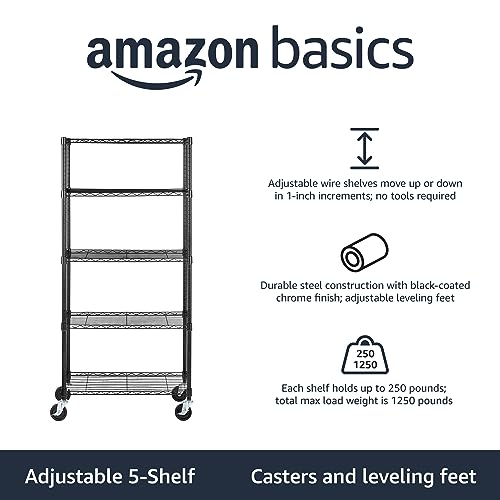


As an Amazon Associate we earn from qualifying purchases. Product prices and availability are accurate as of the date/time indicated.

FDW 6-Tier Rolling Wire Shelving Unit


As an Amazon Associate we earn from qualifying purchases. Product prices and availability are accurate as of the date/time indicated.
What the Numbers Show
In every listing here, the wheeled figure is lower than the fixed one. The Amazon Basics drops from 300 pounds per shelf on feet to 132 at rest on wheels and 88 in motion. The FDW drops from 2,100 pounds total to 510, and the NEAT drops from 2,000 to 400.
Put simply, the stated capacity on wheels is somewhere between about one fifth and under one half of the capacity on feet. That is the figure to plan around if you want to roll the rack.
Why Wheels Reduce the Rating
Casters add small contact points under the uprights, and they have to take the load when the rack is moved over cracks and thresholds. The listings do not explain their ratings in detail, but a rack in motion is under more stress than one standing still, which is why the Amazon Basics gives a lower figure for moving.
Think of the wheeled rating as the number that matters for daily use if you plan to roll the rack, and the fixed rating as the number that matters for storage while the rack stands still. A rack that spends most of its life parked can still benefit from wheels, but only if you respect the lower figure whenever you move it.
When Wheels Make Sense
- You need to pull the rack out to reach the wall or clean behind it
- You move it between the garage and the driveway for projects
- You store light and medium items such as bins and supplies
- You want to rearrange the garage layout from time to time
When Fixed Is the Better Choice
- You store heavy tools, paint or hardware
- The rack stays in one place
- You want to anchor the rack to the wall
- You want the highest stated capacity from the same frame
Cost of Moving a Loaded Rack
Moving a full rack is a repeated stress on the casters and the frame. If you plan to roll the rack every week, favor a unit with a stated moving rating, as the Amazon Basics provides, and check the wheels for flat spots and debris now and then. If you rarely move it, the extra stress is small, and the feet may be the better choice.
Stability, Brakes and Floors
A tall rack on wheels is top-heavy once loaded. Keep heavy items on the lowest shelves and lock the wheels before you open a bin. The BYNSOE, for example, lists two brake wheels, and locking all four is steadier. Check the floor too, since a slope can make a parked rack creep.
Floors, Thresholds and Routes
Before you decide, walk the route the rack will take. Cracks, expansion joints and door thresholds are hard on casters, and a loaded rack can catch and tip. Four-inch wheels, as on the Amazon Basics, roll more easily than small ones. Clear the path of cords, hoses and debris before you move the rack.
A Practical Middle Path
Several units, including the Amazon Basics, FDW and Sakugi, include both wheels and leveling feet. You can set the rack up on feet for heavy loads and switch to wheels for a light layout. Decide before you load it, because changing the setup on a full rack is awkward and risky.
Questions to Ask the Seller
- What is the capacity per shelf with the casters fitted?
- Does the total rating apply on wheels or only on feet?
- Are all four wheels lockable?
- Is there a wall-fixing option for a parked rack?
Planning Your Load
Estimate the weight on each shelf before you choose. Add up the items you plan to store, compare the total with the wheeled and fixed figures, and leave a margin. If the number lands close to the wheeled limit, either buy a rack with a higher stated rating or use leveling feet and keep the rack parked.
Frequently Asked Questions
Can I roll a loaded rack?
Only within the stated moving rating. The Amazon Basics lists 88 pounds per shelf in motion, so empty the heavy items first.
Which units include both wheels and feet?
The Amazon Basics, FDW and Sakugi listings describe both. Check the listing for the exact model.
Do wheels make a rack unstable?
They can, especially on tall units. Lock the wheels when parked and keep weight low.
Can I use feet and wheels together?
Not at the same time. Listings describe one setup or the other, so follow the manual.
Does every listing state both ratings?
No. Some give only a headline total, so ask the seller what applies with the wheels fitted.
Where can I compare fixed racks?
See our guide to the best heavy duty garage shelving.
Final Verdict
Choose wheels when mobility matters and your loads are light, and choose fixed shelving when you store heavy items and want the highest stated capacity. Whichever you pick, plan around the lower figure that applies, lock the wheels when parked and never exceed the stated rating. Check current details on the Amazon Basics 5-Shelf Rolling Wire Shelving Rack and the FDW 6-Tier Rolling Wire Shelving Unit.
About the author

admin writes reviews and buying guides for HomeTipsToday.