
Fabric vs Plastic Storage Cubes: Which Is Better?
Fabric and plastic storage cubes differ in cleaning, stiffness, folding and handles. We compared four sets using manufacturer listing figures.
 By HomeTipsToday Editorial Team
Updated November 15, 2026
Fabric vs plastic storage cubes is the first choice to settle before you buy bins for a cube shelf, because the material decides how easy the bins are to clean, how well they hold their shape and how they store when empty. This comparison uses manufacturer listing figures for the Amazon Basics and DECOMOMO fabric sets and the Curver and Tstorage plastic sets. The right pick depends on the room and what you store. Browse all Cube Storage guides for shelves and more.
Fabric vs Plastic Storage Cubes at a Glance
| Factor | Fabric (Amazon Basics, DECOMOMO) | Plastic (Curver, Tstorage) |
|---|---|---|
| Size | 10.5 x 10.5 x 11 in (both) | 10.7 x 10.7 x 10.6 in (Curver); 10.82 x 10.82 x 11.22 in (Tstorage) |
| Pack size | 6 | 4 |
| Walls | Fabric over cardboard; 2.6 mm board stated for DECOMOMO | Resin (Curver); plastic, collapsible (Tstorage) |
| Handles | One handle (Amazon Basics); two handles and a label holder (DECOMOMO) | Handles (Curver); cutout side handles (Tstorage) |
| Folds flat | Yes | No (Curver); yes (Tstorage) |
| Stated weight limit | 11 lb per bin (DECOMOMO); none for Amazon Basics | None stated |
| Cleaning | Dry or damp cloth, per listings | Wipe clean, per listings |

Amazon Basics Collapsible Fabric Storage Cubes


As an Amazon Associate we earn from qualifying purchases. Product prices and availability are accurate as of the date/time indicated.

DECOMOMO Fabric Storage Cubes with Labels (6 Pack)


As an Amazon Associate we earn from qualifying purchases. Product prices and availability are accurate as of the date/time indicated.

Curver 17L Jute-Look Plastic Storage Cubes


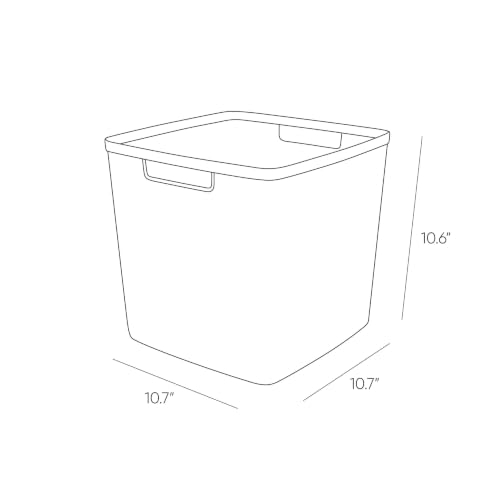


As an Amazon Associate we earn from qualifying purchases. Product prices and availability are accurate as of the date/time indicated.

Tstorage 11 Inch Collapsible Plastic Storage Cubes


As an Amazon Associate we earn from qualifying purchases. Product prices and availability are accurate as of the date/time indicated.
Cleaning and Moisture
The Tstorage listing says its plastic cubes wipe clean with a damp rag, and the Curver listing describes a resin build that gives the look of fabric without the upkeep. That matches the general advantage of plastic: it does not soak up spills, so it suits laundry rooms, garages and kids’ rooms.
Fabric is softer on contents, but in general it can hold dust and damp. The listings recommend dry or damp cloths for fabric cubes, and none of them mentions machine washing, so check the care notes before you try it.
Shape and Stiffness
The DECOMOMO listing gives 2.6 millimeter cardboard throughout its fabric cubes, which helps them keep their shape. The Amazon Basics listing describes lightweight fabric and the six-pack weighs about 1.14 pounds, so its walls are thin.
Rigid resin, like the Curver set, holds a fixed shape, and the four-pack weighs about 5.75 pounds. Tstorage is collapsible plastic, so its shape depends on the folds locking open. The Curver listing gives no weight limit, so do not assume a rigid cube holds more than its fabric rivals.
Storage When Empty
Both fabric sets and the Tstorage plastic cubes fold flat, which makes spares easy to keep in a drawer or closet. The Curver cubes do not fold, so extra cubes take as much room as full ones.
If you buy more bins than you need today, a foldable set saves space. If the bins will stay on a shelf, the fold matters less, and a rigid cube may look neater.
Handles and Weight Limits
The Amazon Basics fabric cubes have one sewn-in handle, while DECOMOMO lists two handles and a label holder, with a limit of 11 pounds. Tstorage lists cutout handles on both sides, and Curver lists handles without a count.
Only DECOMOMO states a weight limit among these four, and it is a seller figure. Treat the others as suited to light and medium loads, and spread dense items across several bins.
Common Mistakes to Avoid
- Buying bins before you measure the shelf opening, since sizes differ by a fraction of an inch.
- Assuming plastic holds more weight than fabric when the listing gives no limit.
- Overfilling collapsible bins, which stresses handles and folds.
- Using fabric bins for damp items.
- Ignoring the lid or open-top need before you buy.
- Mixing sizes on one shelf, which makes the rows look uneven.
Which Should You Choose?
| Choose Fabric If | Choose Plastic If |
|---|---|
| You want a soft look in a bedroom or nursery | You want bins that wipe clean in a laundry room or garage |
| You want bins that fold flat to store spares | You want a rigid shape that stays put on a shelf |
| You want a label holder or two handles (DECOMOMO) | You want the woven look in a rigid cube (Curver) |
| You store clothes, linens or soft toys | You store items that can spill or get damp |
Frequently Asked Questions
Are fabric or plastic storage cubes sturdier?
It depends on the build. A fabric cube with thick board, like DECOMOMO, can keep its shape well, and a thin fabric set will not. Rigid resin keeps its shape, but the listings give no weight limit for it.
Which cubes are easier to clean?
Plastic is easier to wipe, and the listings for Tstorage and Curver say so. Fabric needs a dry or damp cloth, and heavy staining is harder to remove.
Do both types fit standard cube shelves?
The sizes listed are about 10.5 to 11.2 inches, which fits an 11 inch opening with a small gap. Measure your shelf first.
Where can I see more options?
See our best fabric storage cubes and best plastic storage cubes guides for full comparisons.
Final Verdict
Fabric suits soft items and bedrooms, and it folds flat, as the Amazon Basics set and the DECOMOMO set do. Plastic suits damp or messy rooms and wipes clean, as the Curver set and the Tstorage set do. Measure your shelf opening first, then match the material to the room. Prices change often, so we do not list them, and the weight limits here are the sellers’ own.
About the author

The HomeTipsToday Editorial Team researches home storage and organization products. We compare manufacturer specifications, listing information, and buyer ratings where they exist, and we do not run physical trials. Our method is described on the How We Review page, and affiliate commissions do not affect how products are ranked.